
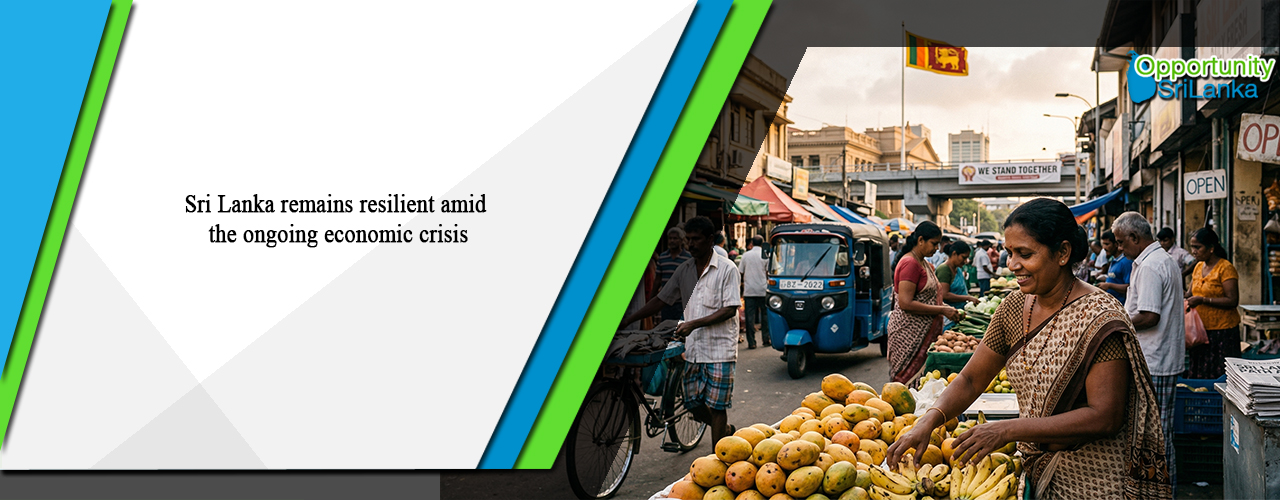
Sri Lanka remains resilient amid the ongoing economic crisis
The Morning: Sri Lanka is expected to remain resilient amid the ongoing economic crisis by maintaining inflation at a low level, despite the possible threats posed by rising fuel prices, Deputy Minister of Finance and Planning Prof. Anil Jayantha Fernando said on Friday (20).
Prof. Fernando stated: “Sri Lanka is experiencing an external shock, followed by a rapidly increasing global fuel prices, triggered by external geopolitical tensions. Due to the ongoing disruptions in shipping and freight transport, the instant issue that came up was the rapid rise of fuel prices, which rose around 60%.”
“Within the country, oil refineries are working to meet demand, but prices for refined oil are climbing rapidly in proportion to bore oil prices,” he pointed out, however, that if the ongoing conflict continues, further price hikes are possible.
To avoid hyperinflation, Prof. Fernando said: “Currently the government has taken measures to limit the increase of fuel prices only up to 8% in the country because prices of commodities are rising rapidly and to avoid inflation, the economy should stay within the target of 5%. But however, if the war continues, then there will be a hike in the country as well.”
“Shipping costs also have increased by around 20-25%, with also a 100% increase in airline fares. But Sri Lanka managed to keep inflation below the target, 1.6, even though there’s a rise in fuel prices the economy can maintain its inflation level at a low rate.”
According to Prof. Fernando, there are two main factors in managing this crisis. The first is inflation. Sri Lanka is following a system called the ‘flexible inflation targeting’ framework, aiming to keep inflation around 5% over the next three years. So far, the country has managed to stay under this target, and interest rates have been kept at a lower level to avoid inflation, which provides resilience in managing this economic crisis.
The second factor is the foreign exchange rate. The US dollar is gaining value against many other currencies. Countries are influenced to use dollars in terms of their local weak currencies due to this global economic crisis. This could lead to dollars leaving the country, but Sri Lanka has so far managed to keep the situation under control. However, because of the war conflict, the rupee has depreciated against the dollar.
Prof. Fernando mentioned that “rapid increases in import prices and high levels of inflation have been mitigated because a framework has been implemented to manage this economic crisis.”
“The previous months of January and February were not affected in terms of foreign remittances to Sri Lanka. By the end of 2025, foreign remittances exceeded USD $8 billion, and the country should be able to build remittances as a buffer amid the war to manage this economic crisis,” he said.
Furthermore, Fernando mentioned: “Sri Lanka is resilient amid the war. A rise in inflation might occur, but Sri Lanka is able to manage it. A key factor to consider is the ‘current account balance,’ where Sri Lanka recorded the highest amount of $ 1.733 billion in 2025. Hence, this is also a resilient way to overcome these economic crises and challenges.”
OSL take:
Sri Lanka’s economy has shown great strength and resilience to external and internal challenges through the years with the last key incident being the unprecedented economic crisis faced by the country in 2022. Sri Lanka’s quick turnaround and return to economic growth served to boost the confidence of many foreign businesses/investors in Sri Lanka. The ongoing conflict in the Middle East that has affected the global economy has also posed some challenges to Sri Lanka as well. Yet, the country’s strategic positioning in the Indian Ocean, strong trade ties with many foreign countries as well ad the improving business conducive environment have all helped to minimize many negative impacts on Sri Lanka with many foreign businesses/investors looking at the island as a potential destination to move their Asian operations to. Sri Lanka’s close proximity to international maritime lanes and increasing attraction as a must visit tourist destination continue to attract attention of foreign travelers as well as businesses to explore the country. Given all these factors, foreign businesses/investors could confidently explore the expanding business/investment opportunities in Sri Lanka while also looking at business engagements in the country through local collaborations since Sri Lanka is an emerging business destination in the South Asian reg
| Article Code : | VBS/AT/20260331/Z_3 |