
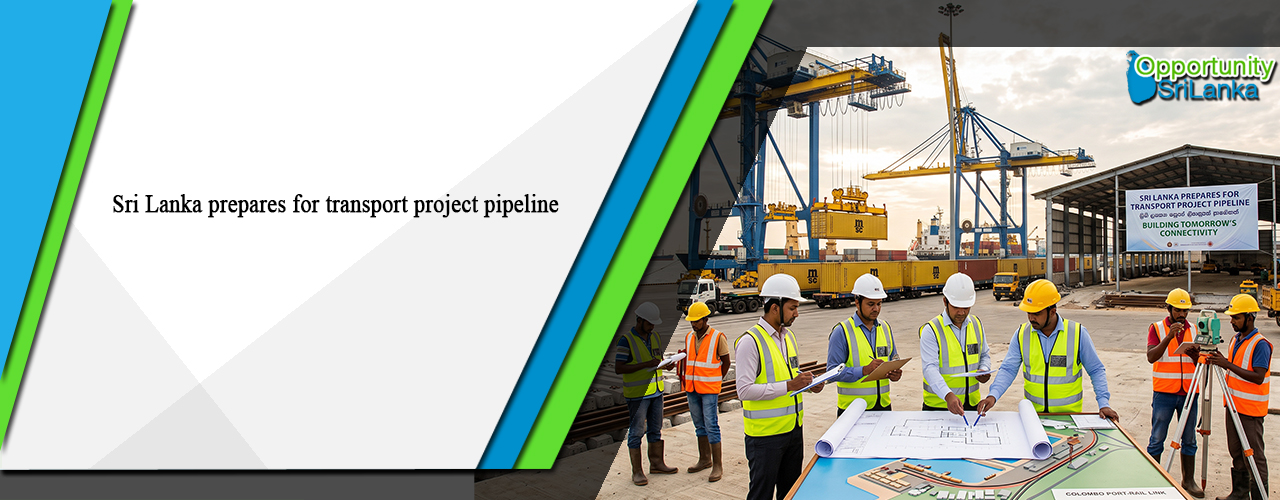
Sri Lanka prepares for transport project pipeline
The Morning: Sri Lanka is to see a host of transport infrastructure projects in the next 2–3 years, as the government is within the phase of reviewing the capital expenditure, economic outcomes and environmental impacts that the projects are to unlock, Deputy Minister of Transport Prasanna Gunasena said in Parliament recently.
“We know that our government works according to a national development plan. Within the next 2 to 3 years, it is necessary to outline how capital expenditure is going to be allocated towards infrastructure projects,” Gunasena told Parliament.
“For these particular projects, we obtain feasibility studies and evidence-based reports on the economic outcomes and environmental impacts that pertain to the plans for these projects. Within the next 2–3 years we have planned for a pipeline of projects to see to what extent the Railways Department should go, in terms of expansion.”
Within Sri Lanka’s 2026 Budget, announced in November 2025, Rs 3,300 million had been allocated towards starting the procurement process involving five new Diesel Multiple Units (DMUs) for the Sri Lanka Railways Department; and the digitalisation of the railway service.
In the aftermath of Cyclone Ditwah, Deputy Minister Gunasena informed the media that reconstruction of Sri Lanka’s railway lines would roughly cost between $ 320 million or $ 350 million.
In March, speaking on a World Bank panel, he said that though 71% of Sri Lanka’s railway system has been restored post-Cyclone Ditwah, a lack of sufficient financing keeps the national transport agencies from fully implementing a climate-resilient infrastructure transportation system.
The Sri Lankan Government is yet to produce a document on its national transport strategy.
Speaking in Parliament, in response to a proposal on the nature of accepted infrastructure projects, he said: “We approach the National Planning Department for its approval. It is once that we have taken this approval that we approach the Budget document with the intent of opening a budget line for the project for allocation.”
“One such example is the KV Line, which is a railway line that extends to Ratnapura. At this point, the feasibility study is underway for the Avissawella to Ratnapura extent of the line, which we think the report for, would be produced by December. That would follow a detailed design and the procurement process.”
OSL take:
Sri Lanka’s expanding economy and growing ambitions as a South Asian business hub are creating fresh business/investment opportunities for foreign businesses/investors in the country’s transport infrastructure sector, particularly in railways, public transport, logistics and digital mobility. The Sri Lankan Government is preparing a pipeline of transport infrastructure projects for the next two to three years, with investment decisions increasingly being assessed against expected economic returns, capital requirements and environmental impacts. Deputy Minister of Transport Prasanna Gunasena recently told Parliament that feasibility studies and evidence-based assessments would guide the allocation of capital expenditure to major infrastructure projects. The railway sector is likely to be a key area of expansion. The 2026 Budget allocated Rs. 3.3 billion to begin procurement of five new Diesel Multiple Units (DMUs) and to support the digitalisation of railway services. Beyond rolling stock, opportunities are expected to emerge in railway modernisation, signalling, ticketing, maintenance, station development and technology-driven transport solutions. For foreign businesses, the opportunity extends beyond government-funded projects. Improved domestic connectivity will be increasingly important as Sri Lanka attracts investment into manufacturing, tourism, logistics, ports, export industries and regional services. Efficient links between ports, industrial zones, commercial centres and tourist destinations can reduce logistics costs and strengthen the country’s competitiveness as an investment destination. This creates potential for international companies with expertise in rail technology, engineering, construction, transport management, digital systems, electric mobility, logistics and public-private partnership (PPP) models. As the Sri Lankan Government moves towards evidence-based infrastructure planning, Sri Lanka’s transport sector could increasingly become an avenue for long-term foreign investment rather than simply a public expenditure programme.
| Article Code : | VBS/AT/20260814Z_3 |