
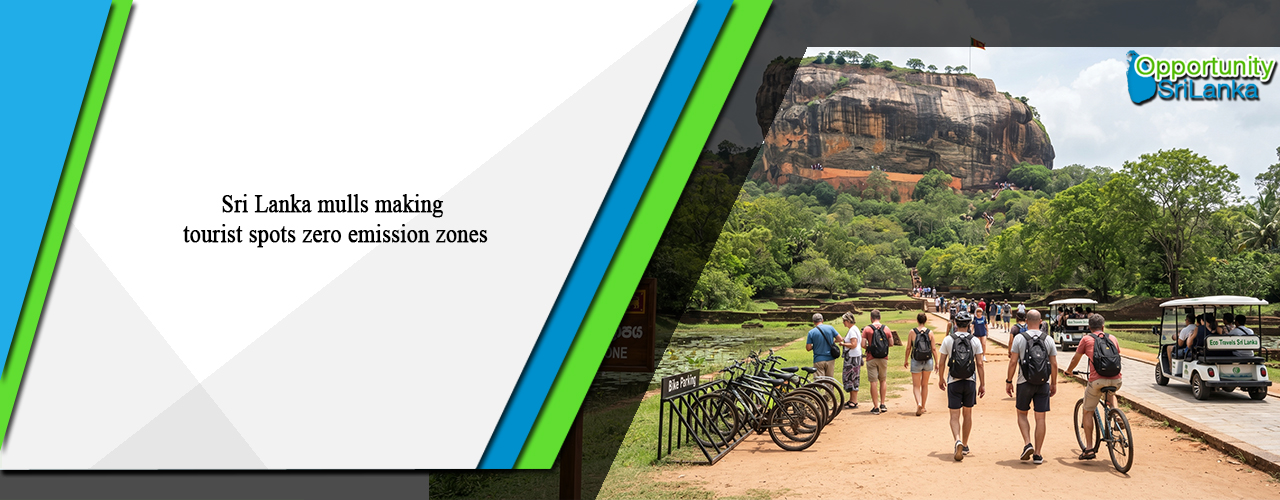
Sri Lanka mulls making tourist spots zero emission zones
EconomyNext: Sri Lanka’s government is considering transforming tourist zones into “Zero Emission” zones in the future, the government information department has said.
“The necessary background and possibilities for this have already been explored, and it is expected that this eco-friendly approach will give new life to the green tourism industry in Sri Lanka.”
Steps to promote environmentally friendly electric vehicles (EVs) in tourist zones are being considered, according to the statement.
“The primary hope is to transform these unique tourist zones into “Zero Emission” zones in the future, utilizing various investments and practical programmes.”
OSL take:
Sri Lanka’s move toward developing “Zero Emission” tourist zones signal a notable shift in how the country is positioning its tourism industry – aligning growth with sustainability, clean energy adoption, and low-carbon mobility. With tourism already on a steady recovery and expansion path, this transition is creating fresh and diversified business/investment opportunities for foreign businesses/investors and green technology providers. A key area of opportunity lies in sustainable mobility solutions. The proposed introduction of EVs in tourist zones opens the door for investment in EV fleets, charging infrastructure, battery-swapping networks, and smart mobility platforms. Foreign companies specialising in last-mile transport, electric shuttle services, and eco-friendly tour operations can play a central role in shaping the visitor experience in these designated zones. Beyond transport, there is growing demand for green hospitality infrastructure. Hotels, resorts, and tourism operators will increasingly need to adopt renewable energy systems, energy-efficient building designs, waste management solutions, and water conservation technologies. This creates opportunities for foreign businesses/investors in solar energy integration, green building materials, and environmental engineering services tailored to the hospitality sector. Digital innovation also has a strong role to play. Smart tourism systems – ranging from carbon tracking apps to AI-driven visitor management and sustainable destination platforms – can help operators meet environmental targets while improving efficiency and visitor satisfaction. Overall, the push toward zero-emission tourism zones reflects a broader transformation of Sri Lanka’s tourism industry into a more sustainable and future-ready sector. For foreign businesses/investors, it offers a chance to participate early in a green growth model that combines natural tourism appeal with emerging clean technology demand.
| Article Code : | VBS/AT/20260616Z_3 |