
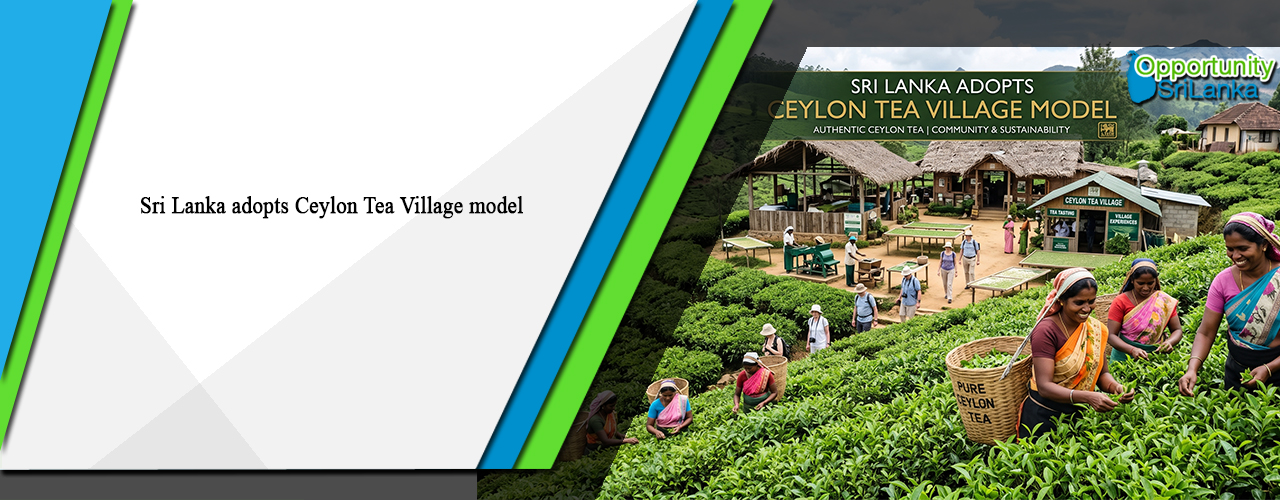
Sri Lanka adopts Ceylon Tea Village model
Daily FT: The Government is moving to restructure its smallholder tea sector through a large-scale “Ceylon Tea Village” programme aimed at boosting productivity, value addition and export earnings, while repositioning the industry towards a $ 2.5 billion annual export target by 2030.
Plantations and Community Infrastructure Minister Samantha Vidyarathna has told Parliament that the initiative, built around 500 cluster tea villages countrywide, will be key to lifting finished tea production to 400 million kilograms while improving farmer incomes and strengthening the country’s global positioning in premium tea markets.
The programme, implemented through the Tea Small Holders Development Authority (TSHDA), Tea Research Institute (TRI), Sri Lanka Tea Board (SLTB) and National Plantation Management Institute, will begin with 144 tea villages in 2026 across 14 districts, with an official launch scheduled for 15 July.
The model is designed to integrate productivity upgrades, modern cultivation practices, infrastructure development and cooperative structures at the village level.
The Minister said the reform push is also intended to bridge long-standing structural weaknesses in the smallholder segment, including low yields, weak value addition and limited integration with tourism and branded exports. The programme will also promote tea-linked tourism and introduce value-added products as part of a broader effort to shift Sri Lanka from bulk commodity exports towards higher-margin branded positioning.
OSL take:
Sri Lanka’s tea industry is entering a new phase of modernisation and expansion, creating significant business/investment opportunities for foreign companies/investors across the tea value chain. The Sri Lankan government’s proposed “Ceylon Tea Village” programme, which envisages the establishment of 500 cluster tea villages nationwide, is designed to increase productivity, improve the livelihoods of smallholder growers, promote value addition, and strengthen the country’s position in the global premium tea market. The initiative forms part of a broader strategy to raise annual tea exports to $ 2.5 billion by 2030 while increasing finished tea production to 400 million kilograms. The industry’s transformation is expected to generate growing demand for foreign investment, advanced agricultural technologies, modern processing equipment, automation, irrigation systems, sustainable cultivation practices, packaging solutions, branding expertise, quality certification, research and development, and export marketing. Business/investment opportunities also exist for joint ventures in value-added tea products, specialty and wellness teas, organic production, and supply chain development. As Sri Lanka seeks to enhance the global competitiveness of its internationally recognised Ceylon Tea brand through innovation and higher-value exports, the sector offers attractive long-term prospects for international businesses/investors looking to establish strategic partnerships in one of the country’s most important export industries.
| Article Code : | VBS/AT/20260708Z_4 |