
Sri Lanka’s Mirissa harbour to get fisheries-tourism upgrade
aily Mirror: South Korea has agreed in principle to support a programme to develop Mirissa Harbour as a fisheries and tourism port, while also exploring cooperation with Sri Lanka in fisheries technology, aquaculture and marine biotechnology.
The preliminary agreement was reached during bilateral discussions between Sri Lanka’s Secretary to the Ministry of Fisheries, Aquatic and Ocean Resources, Dr. B.K. Kolitha Kamal Jinadasa, and South Korean representatives during his visit to Busan.
Dr. Jinadasa attended the 2026 Korea International Cooperation Conference on Oceans and Fisheries (KICCOF-2026) at the invitation of South Korea’s Ministry of Oceans and Fisheries. The conference, organised by the Korea Maritime Institute (KMI) under its Best Achievements in Oceans and Fisheries Official Development Assistance (BADA) programme, was held under the theme “A New Path for Ocean and Fisheries ODA: Connecting Technology, Communities, and People”.
The event brought together nearly 100 government officials and experts from 11 countries to discuss cooperation in ocean and fisheries development.
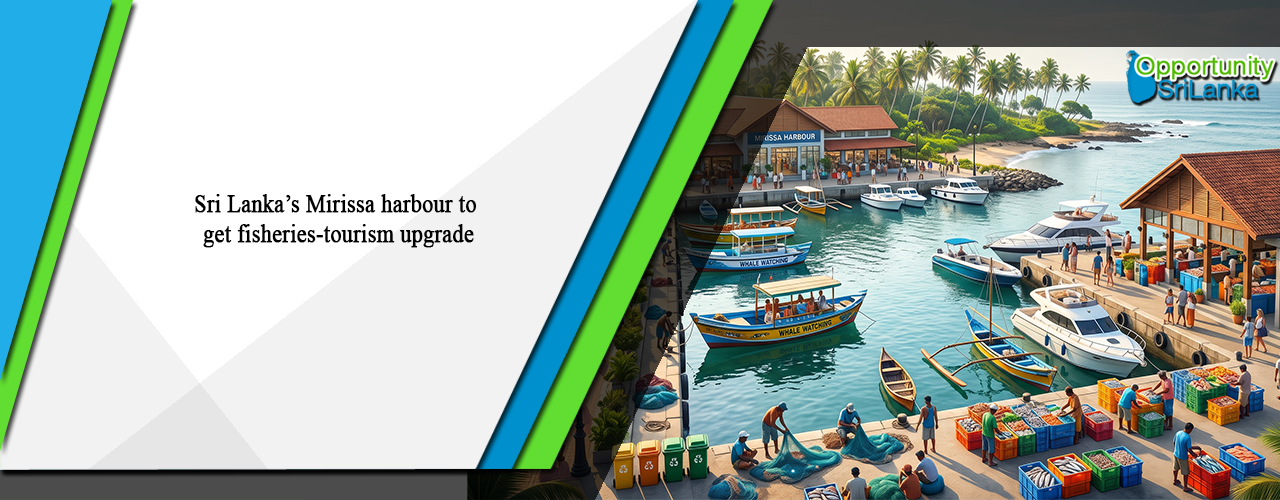
During the bilateral discussions, Sri Lanka focused on attracting South Korean investment to modernise its fisheries industry, promote local fisheries and develop fisheries tourism. The proposed development of Mirissa Harbour is expected to combine fisheries-related activities with tourism while addressing marine litter.
The two sides also discussed the possibility of introducing artificial intelligence-based forecasting technology to Sri Lanka’s fisheries sector by 2028, with a view to improving forecasting capabilities and supporting the industry.
Meanwhile, South Korean investors were invited to explore investment opportunities in Sri Lanka’s aquaculture, marine bioprospecting and blue biotechnology sectors.
Addressing the conference, Dr. Jinadasa highlighted the longstanding relations between Sri Lanka and South Korea and the close cooperation between Sri Lanka’s Fisheries Ministry and South Korean institutions, including the Korea Maritime Institute and the Korea Institute of Ocean Science and Technology (KIOST).
He said such international partnerships had helped create new employment opportunities for Sri Lankan youth in the fisheries sector.
The conference also provided an opportunity to identify future areas of cooperation by linking maritime technology with the development needs of coastal communities.
OSL take:
Sri Lanka’s expanding tourism industry and growing efforts to modernise its fisheries sector are creating new business/investment opportunities for foreign businesses/investors in an emerging area of the country’s blue economy – fisheries tourism. With its extensive coastline, established fishing communities, diverse marine resources and growing international tourism appeal, Sri Lanka is well positioned to develop fisheries tourism as a new investment frontier, combining traditional fishing activities with coastal tourism, marine experiences and sustainable ocean-based businesses. The proposed development of Mirissa Harbour as a combined fisheries and tourism port, with preliminary support from South Korea, represents an important step towards realising this potential. The initiative is expected to create opportunities for investment in harbour infrastructure, seafood processing, tourism facilities, marine recreation and waste management, while strengthening the economic contribution of local fishing communities. South Korea’s interest also highlights the potential for international partnerships in fisheries technology, aquaculture, marine biotechnology and artificial intelligence-based forecasting systems. These areas offer business/investment opportunities for foreign businesses to introduce advanced technologies, develop joint ventures and improve the productivity and sustainability of Sri Lanka’s fisheries industry. Beyond Mirissa, other coastal destinations could benefit from investments in fishing excursions, seafood tourism, recreational boating, marine conservation experiences, coastal accommodation and integrated waterfront facilities. For international investors, the attraction lies in the opportunity to tap into two expanding markets simultaneously: tourism and the blue economy. Rising demand for authentic travel experiences, locally sourced seafood and sustainable marine tourism could provide additional commercial opportunities.