
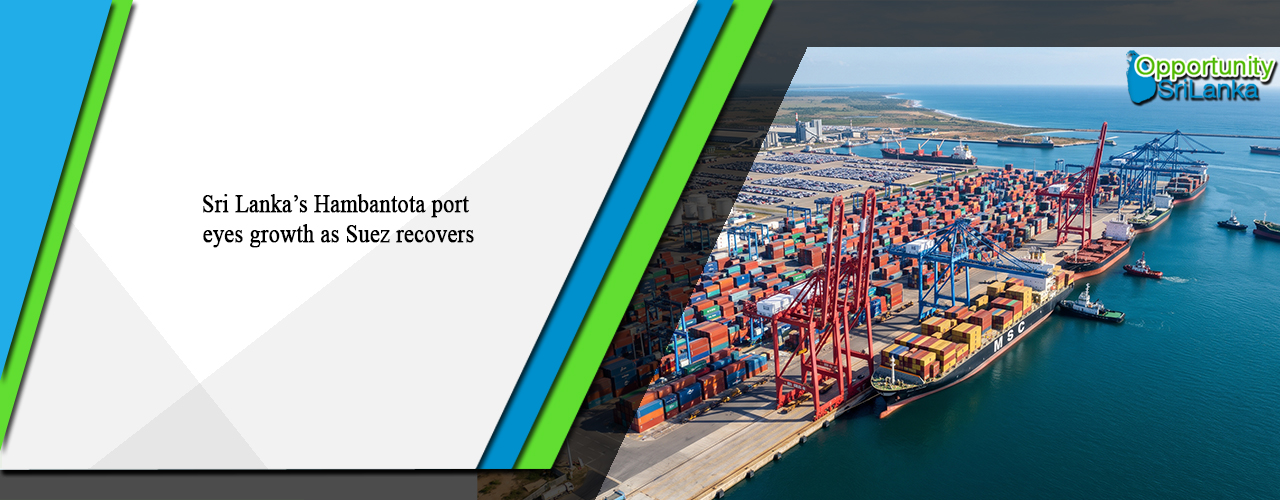
Sri Lanka’s Hambantota port eyes growth as Suez recovers
EconomyNext: Sri Lanka’s Hambantota International Port Group (HIPG) said it expects the return of container shipping through the Red Sea and Suez Canal to create growth opportunities.
The recovery of the main East-West shipping corridor could strengthen Hambantota’s position as a regional transshipment and maritime services hub, the port operator said, after using the disruption in the Red Sea to establish its container business.
“The Red Sea disruption advanced our container project,” HIPG General Manager for Commercial and Marketing Bindu Ranasinghe said.
“Congestion in Colombo Port created a requirement for additional capacity, and we began accommodating overflow cargo with the resources available to us in April 2024. That experience encouraged us to proceed with a full-scale operation and further investment.”
Hambantota commenced its first MSC container transshipment service in April 2024 and has since committed 149 million US dollars towards new container handling equipment as part of a capacity expansion programme.
The Chinese-built and operated southern port is preparing to expand annual container handling capacity to 2 million TEUs by the first quarter of 2027.
The port’s optimism follows maritime consultancy Linerlytica’s October 2026 outlook which forecast a progressive return of container services to the Suez route.
Hambantota’s location could become an advantage as more carriers return to the traditional route linking Asia and Europe.
“When vessels use the established East-West route through Suez, they pass much closer to Hambantota,” Ranasinghe said.
“We have used the period of disruption to expand our capabilities, and a sustained return to that route would give us a stronger opportunity to attract business.”
As vessel traffic through the corridor increases, Hambantota expects greater demand for bunkering, ship supplies and related marine services.
HIPG is also looking to build a gateway cargo base by attracting Sri Lankan import and export cargo.
A planned container inspection centre and industrial development around the port are expected to support that strategy from early 2027.
“To attract more shipping lines and services, we also need gateway cargo,” Ranasinghe said.
“Industrial development within and around the port, together with the inspection facilities we are establishing, will help create the conditions for that business to grow.”
While improved access to Gulf ports could see some cargo return to previous arrangements, HIPG believes commercial relationships and alternative logistics networks established during the disruption may continue.
“Shipping lines and their customers have established alternative arrangements, and those networks will not necessarily change immediately,” Ranasinghe said.
OSL take:
Sri Lanka’s expanding maritime sector is creating business/investment opportunities for foreign businesses across port operations, shipping, logistics, marine services and industrial development, as the country seeks to strengthen its position along major international shipping routes. The Hambantota International Port’s container expansion illustrates the potential. The port operator has committed US$149 million towards new container-handling equipment and is targeting annual capacity of two million TEUs by the first quarter of 2027. A gradual return of container shipping through the Red Sea and Suez Canal could further increase its appeal as a transshipment and maritime services hub. For foreign businesses/investors, opportunities extend beyond container handling to bunkering, ship supplies, vessel maintenance, marine engineering, cargo inspection, warehousing and freight management. Growing vessel traffic and demand for integrated port services could create openings for international operators, technology providers and joint ventures with local businesses. Industrial development around ports also offers potential in export-oriented manufacturing, processing, storage and distribution. Hambantota’s planned container inspection facilities and efforts to attract domestic gateway cargo could support the development of wider logistics and industrial supply chains. Sri Lanka’s strategic location near major East-West shipping lanes, together with its established port infrastructure in Colombo, Hambantota and Trincomalee, provides a platform for investors seeking access to regional maritime trade. Foreign companies could also use Sri Lanka as a base for serving South Asian and wider Indian Ocean markets through shipping, logistics and distribution partnerships. As port capacity expands and maritime services diversify, opportunities are emerging for businesses/investors to participate not only in port infrastructure but also in the broader ecosystem supporting international trade.
| Article Code : | VBS/AT/20261102Z_2 |