
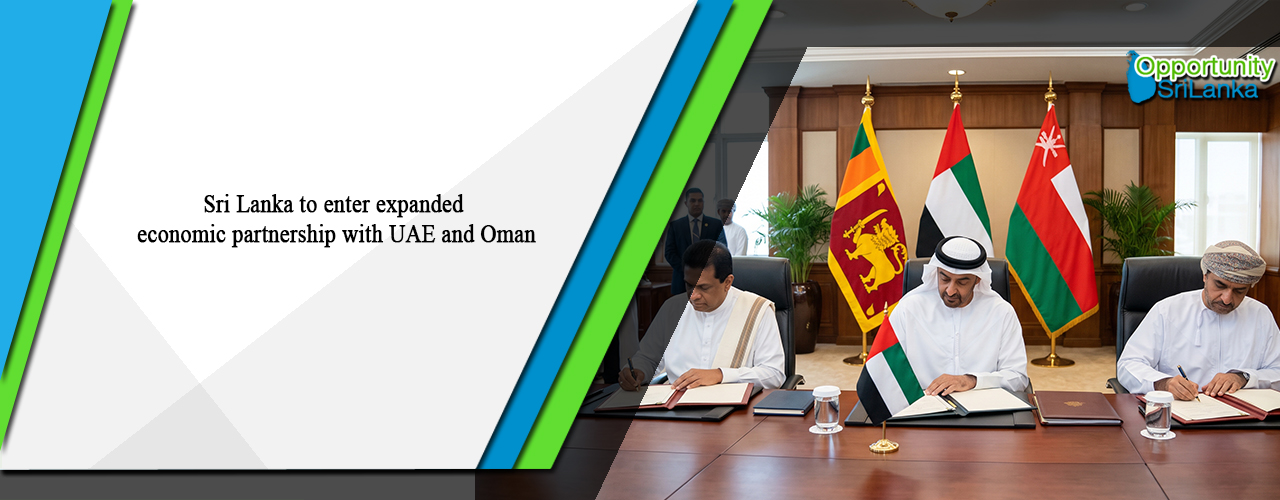
Sri Lanka to enter expanded economic partnership with UAE and Oman
EconomyNext: Sri Lanka will enter into Comprehensive Economic Partnership Agreements with the United Arab Emirates and Oman to boost trade, President Anura Kumara Dissanayake told parliament while presenting the 2027 budget.
He said the government expects to update existing free trade agreements and enter into new trade agreements with more states to connect Sri Lanka to the global trade network.
“To expand the existing free trade agreement with India, the Cabinet of Ministers has already appointed a committee of officials. Attention has been directed toward a new free trade agreement with China. An application has been made to join the Regional Comprehensive Economic Partnership (RCDEP).
“We hope to enter into Comprehensive Economic Partnership Agreements with the United Arab Emirates and Oman.”
He also said the government will implement the Sri Lanka–European Union Sustainable Trade and Economic Integration Project during the 2027–2030 period under a European Union grant of 3,430 million rupees to promote export competitiveness, export diversification, and sustainable production.
“So, we can build a very close relationship with the European market… Furthermore, following a feasibility study, we will work toward entering into new free trade agreements with other countries,” he said.
OSL take:
Sri Lanka’s efforts to expand trade agreements with major international markets are creating fresh business and investment opportunities for foreign companies/businesses seeking access to South Asia and wider global markets. The Sri Lankan Government’s plans to enter into Comprehensive Economic Partnership Agreements with the UAE and Oman, pursue closer trade arrangements with China and India, and join the Regional Comprehensive Economic Partnership (RCEP) reflect an expanding strategy to integrate Sri Lanka into global supply chains. The proposed expansion of existing trade arrangements could create opportunities for foreign businesses/investors in export-oriented manufacturing, logistics, shipping, financial services, technology, agriculture and value-added industries. Closer access to the Indian, Chinese, Middle Eastern and European markets could also encourage international companies to establish production facilities, regional distribution centres and service operations in Sri Lanka. Meanwhile, a European Union-funded programme worth Rs. 3.43 billion covering 2027–2030 will support export competitiveness, diversification and sustainable production, potentially creating opportunities for foreign technology providers, consultants and industrial partners. Sri Lanka’s strategic Indian Ocean location, established port infrastructure and existing trade relationships provide additional advantages for businesses exploring regional expansion. As the country pursues wider market access and stronger international economic partnerships, foreign investors have opportunities to participate in its evolving export and investment landscape.