
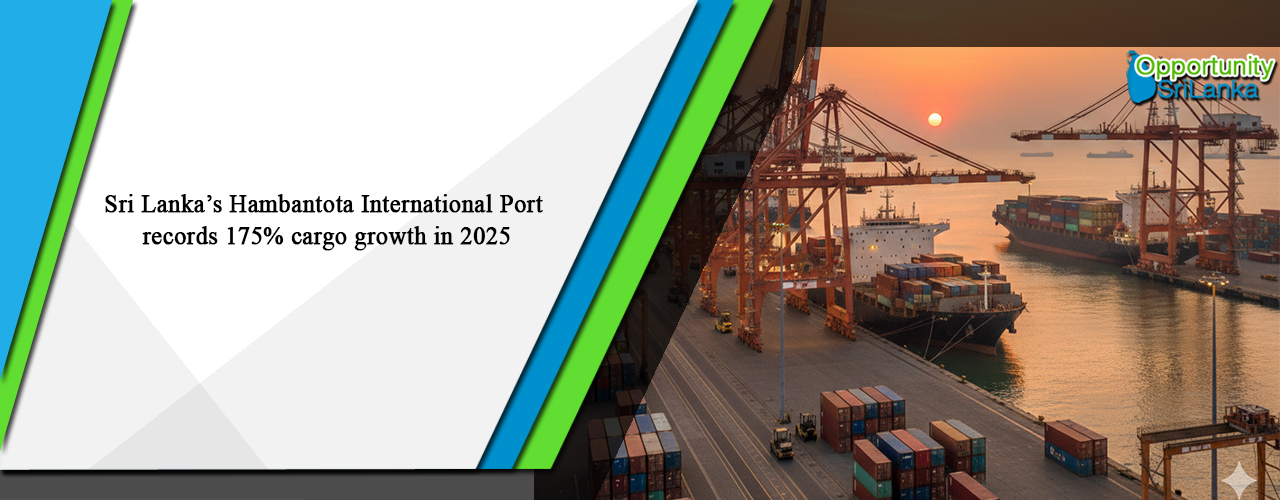
Sri Lanka’s Hambantota International Port records 175% cargo growth in 2025
Daily FT: Hambantota International Port (HIP) has closed 2025 with a landmark performance, recording a 175% year-on-year increase in total cargo volumes despite what has been widely recognised as one of the most challenging years for the global port industry.
HIP handled 8.24 million metric tons of cargo in 2025, up from 3.0 million metric tons in 2024, driven by sharp growth across container, RORO, and bulk cargo segments amid volatile trade flows, supply chain realignments, congestion pressures, and rising operating costs worldwide.
The most dramatic gains came from container traffic. Volumes surged from 53,170 TEUs in 2024 to 428,036 TEUs in 2025, while containerised cargo tonnage rose from 657,504 metric tons to 5.43 million metric tonnes, marking HIP’s rapid emergence as a significant container gateway within a single year.
Scheduled for completion by the end of 2026, the second phase will increase the port’s annual container handling capacity to approximately 2 million TEUs. This will be achieved by allocating four dedicated container berths and adding additional equipment, including six quay cranes (QCs) and sixteen rubber-tyred gantry cranes (RTCs).
RORO operations also delivered solid growth despite subdued global automotive markets. HIP handled 726,153 RORO units in 2025, up from 579,362 units the previous year, with RORO tonnage increasing 25% year-on-year to 965,783 metric tons, supported by steady automotive and project cargo demand.
Bulk and break bulk cargo volumes strengthened further, rising 32% to 1.18 million metric tons, reinforcing the port’s growing role in supporting industrial activity, infrastructure development, and diversified supply chains. Oil and gas volumes remained broadly stable at 661,131 metric tons, reflecting softer global energy market conditions.
Hambantota International Port Group CEO Wilson Qu said: “2025 was not an easy year to be a port. What makes this performance remarkable is not just the scale of growth, but that it was achieved amid sustained global disruption. These volumes reflect customer confidence, operational flexibility, aggressive marketing strategies in Sri Lanka and internationally, as well as the commitment of our team.”
Across the global port sector, 2025 was marked by congestion, geopolitical uncertainty, and shifting trade patterns. Against this backdrop, HIP’s results align with broader industry trends toward cargo diversification, increased containerisation, and operational resilience — key attributes of competitive, future-ready ports.
OSL take:
The increasing numbers of cargo handlings by key ports in Sri Lanka like Colombo and Hambantota are indicative of the steadily growing maritime industry in the country as well as sectors related to it. Sri Lanka is on a path to becoming a maritime hub in the region, supported by the country’s geographical positioning in the Indian Ocean near international maritime lanes and the many trade agreements as well as trade concessions enjoyed with many foreign countries. Sectors like ports, shipping and logistics are on an expansion path recording high operational volumes, indicating the increasing business potential in Sri Lanka’s overall maritime industry as well as the expanding business/investment opportunities in these sectors. Given the increasing growth and business potential in Sri Lanka’s maritime industry and related sectors as well as the increased interest among foreign businesses/investors to explore the expanding opportunities, other foreign businesses/investors could also look at entering the industry while also looking at partnerships or joint ventures with local businesses to expand operations.
| Article Code : | VBS/AT/20260116/Z_4 |