
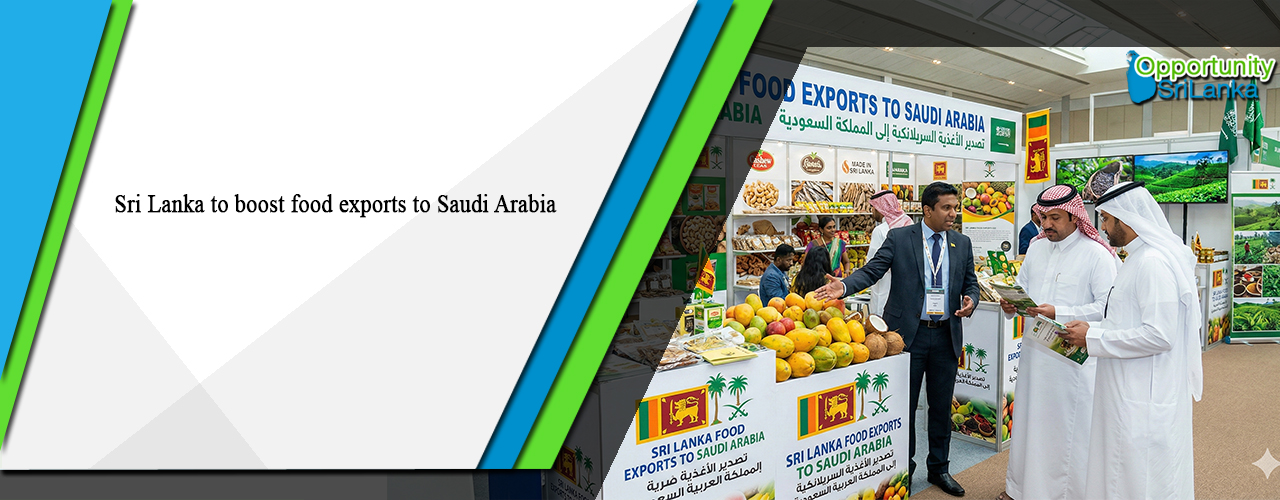
Sri Lanka to boost food exports to Saudi Arabia
The Morning: The Embassy of Sri Lanka in Riyadh has conducted its first virtual regulatory workshop to guide Sri Lankan food and beverage exporters on compliance requirements for entry into the Saudi market, in collaboration with the Saudi Food and Drug Authority (SFDA) and the Sri Lanka Export Development Board (EDB).
The workshop, held on 10 February focused on regulatory procedures governing key export segments including fisheries, poultry, processed foods, fruits and vegetables, beverages, and herbal products.
The initiative was proposed by Sri Lanka’s Ambassador to Saudi Arabia Ameer Ajwad, during discussions with SFDA Chief Executive Officer Prof. Hisham S. Aljadhey, following multiple inquiries received by the Embassy from Sri Lankan exporters seeking clarity on Saudi regulatory requirements.
Delivering the opening remarks, Ambassador Ajwad thanked the SFDA leadership for hosting the session and acknowledged the support of Executive Director of International Cooperation Khalid Almesfair and the SFDA expert team in facilitating the programme.
The Ambassador said economic engagement between Sri Lanka and Saudi Arabia has gained momentum in recent years, citing the establishment of the first Saudi-Sri Lanka Business Council and growth in bilateral trade. He noted that direct engagement between Sri Lankan exporters and the Saudi regulator would help address procedural bottlenecks and facilitate smoother trade flows.
Export Development Board Chairperson Mangala Wijesinghe, who joined virtually, outlined Sri Lanka’s recent export performance and provided an overview of trade relations between the two countries, referencing the country’s ongoing economic recovery efforts.
Executive Director of International Cooperation Khalid Almesfair briefed participants on the SFDA’s role in strengthening international partnerships under Saudi Vision 2030 and reiterated the authority’s support for Sri Lankan companies seeking to enter the Saudi market.
The SFDA expert panel delivered detailed presentations covering product registration procedures, facility approval requirements, inspection protocols, food product specifications, licensing processes, and customs clearance mechanisms. The session aimed to provide exporters with operational clarity on regulatory compliance and market entry procedures.
Officials said the high participation of Sri Lankan exporters in the workshop reflected strong commercial interest in expanding exports to Saudi Arabia and diversifying Sri Lanka’s export basket in the Gulf region.
OSL take:
Sri Lanka’s exports sector, which has recorded steady growth through the years and has become a key revenue generator to the country, is now focused on increasing food exports to foreign markets. These food exports cover several categories ranging from value additions and diversifications of existing crop exports to the production of identified food items for foreign markets. Sri Lanka’s strong trade ties with many foreign countries and further expansion of ties to include more foreign countries have helped boost Sri Lanka’s overall export industry. It is in such a backdrop that Sri Lanka is looking at further increasing food exports to Saudi Arabia while opening more markets for food exports through the participation in many international food and beverage expositions. All these developments indicate an expansion in Sri Lanka’s export industry, especially in food exports, with a potential for further growth given the increasing demand in foreign markets. Foreign businesses/investors could therefore explore the expanding opportunities in Sri Lanka’s food manufacturing and export sectors while also looking at entering the sectors through partnerships or joint ventures with local businesses that are already operating in these sectors.
| Article Code : | VBS/AT/20260303/Z_2 |