
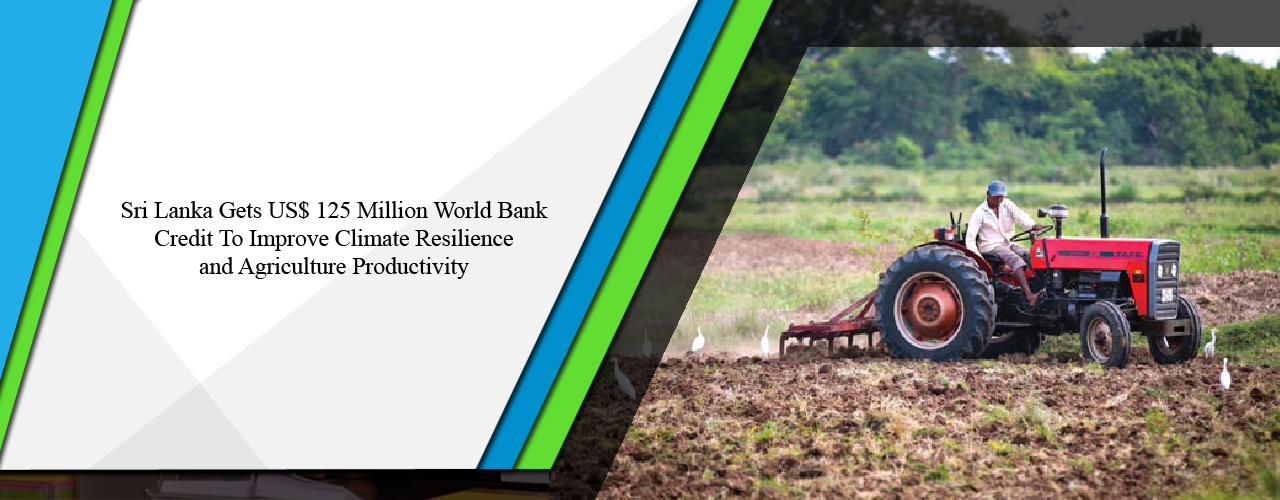
Sri Lanka gets US$ 125 million World Bank credit to improve climate resilience and agriculture productivity
Sri Lanka has received the approval of World Bank Board of Directors for a US$ 125 million credit to improve the climate resilience and productivity of agriculture for more than 470,000 small farmers in six Provinces in the dry zone of the country.
The Provinces selected are those that are most exposed to climate impacts, reports state.
According to World Bank reports, Sri Lanka is particularly vulnerable to climate-related natural disasters such as floods and droughts. The agriculture sector, which contributes approximately 7.7% to the country’s economy and employs 27% of the population – more than 38% of whom are women – is especially affected.
“Innovation, including the introduction of improved crop varieties, cropping patterns, water resources management, amongst others, can help farmers adapt to changing climate and improve their incomes and livelihoods,” World Bank County Director for Maldives, Nepal and Sri Lanka Idah Z. Pswarayi-Riddihough has been quoted by the local media as saying.
“The project will ensure that all farmers get adequate access to training and research. Currently, only 10% of women benefit, and this project will help bridge this gap and improve productivity of both men and women working in agriculture.”
According to reports, this project will support smallholder farmers living in climate ‘hotspot’ areas to increase their access to irrigation and management of water resources, in conjunction with support to enable farmers to adopt climate smart technologies, resulting in increased agricultural productivity and improved access to markets.
Reports further stated that the project will emphasise working through farmer groups, including for irrigation water management and will bring in the private sector to enable increased commercialisation of smallholder farming.
OSL take:
The World Bank credit for climate resilience and the increasing of agriculture productivity targeting dry zone farmers in Sri Lanka provides business/investment opportunities for foreign companies engaged in agriculture as well as irrigation, especially in the introduction of technology. The World Bank credit line offers funding for such programmes. Therefore, foreign companies engaged in the agriculture and irrigation sectors could explore the growing investment opportunities in Sri Lanka’s agriculture and irrigation sectors.
| Article Code : | VBS/AT/12032019/Z_6 |